
Breaking the Craving Loop: How Big Food Keeps Us Hooked

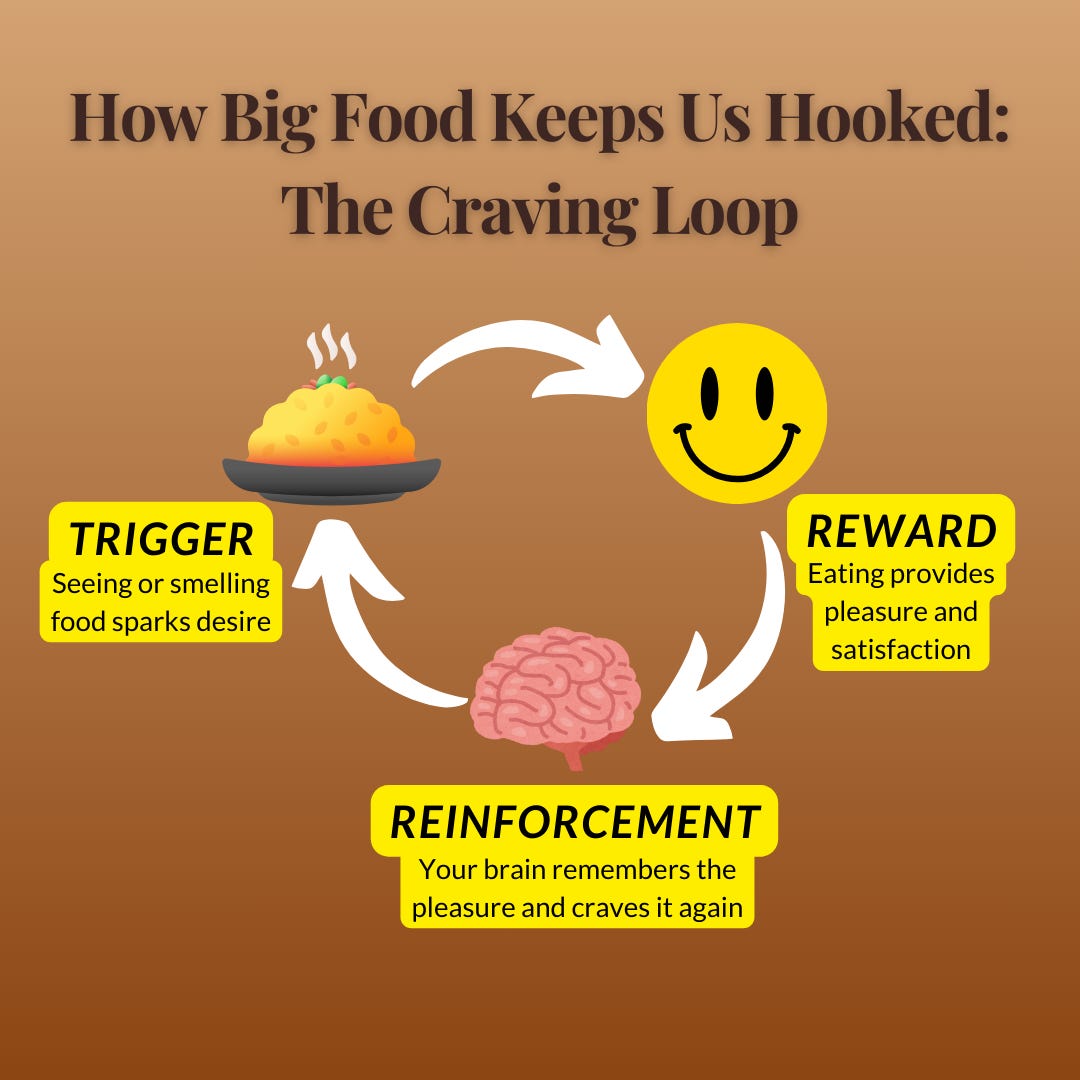
The Craving Loop: Understanding How Food Companies Hook Us
The craving loop is a psychological and biological mechanism that drives our desire for certain foods, often leading to overconsumption. This process is not accidental—big food companies carefully design their products and marketing strategies to exploit this natural cycle. By understanding the craving loop, we can make more informed choices about the foods we eat.
What Is the Craving Loop?
The craving loop consists of three stages that feed into each other:
Trigger: A cue, such as the sight or smell of food, that sparks a desire to eat.
Reward: The act of eating delivers pleasure, often through flavors, textures, or a sense of indulgence.
Reinforcement: The brain associates the experience with satisfaction, making it more likely to crave that food again when triggered.
This cycle repeats itself, creating a pattern of behavior that can lead to habitual snacking or overeating.
How Food Companies Use the Craving Loop
Food companies invest heavily in research to understand how to activate the craving loop effectively. Here are the primary methods they use:
1. The Bliss Point
The "bliss point" is the ideal combination of sugar, fat, and salt that maximizes the pleasure of eating without overwhelming the taste buds. Foods engineered to hit this balance are highly rewarding, making them difficult to resist.
2. Flavor and Texture Engineering
Foods are designed to deliver a specific sensory experience:
Flavors: Enhanced with natural and artificial additives to make them more intense and appealing.
Textures: Optimized for satisfaction, such as the crunch of chips or the creaminess of chocolate.
3. Vanishing Caloric Density
Some foods, like puffs or light snacks, are engineered to "melt in your mouth." This sensation tricks the brain into underestimating how much you’ve consumed, encouraging overeating.
4. Emotional and Social Triggers
Food marketing often ties products to emotions, such as happiness or nostalgia, and social experiences, such as sharing snacks at parties. These associations strengthen the craving loop.
Why the Craving Loop Matters
While the craving loop is a natural process, its exploitation by food companies can have serious implications for health. Foods designed to maximize cravings are often:
High in calories but low in nutrients.
Linked to overconsumption and obesity.
Contributing factors to chronic conditions such as diabetes and heart disease.
By understanding how the craving loop works, consumers can recognize when their cravings are being artificially triggered and take steps to break the cycle.
How to Break Free from the Craving Loop
1. Recognize Triggers
Pay attention to what prompts your cravings. It could be an advertisement, a smell, or even stress. Being mindful of these triggers can help you manage your response.
2. Choose Whole, Nutrient-Dense Foods
Foods that are less processed and closer to their natural state are less likely to overstimulate the craving loop. Focus on fruits, vegetables, nuts, and whole grains.
3. Practice Mindful Eating
Eat slowly, savor your food, and pay attention to hunger and fullness cues. This approach can help you enjoy food without overindulging.
4. Limit Exposure
Avoid keeping highly processed snacks in your home and limit exposure to food marketing when possible.
Conclusion
The craving loop is a powerful cycle that drives our eating habits, often without us realizing it. While food companies leverage this mechanism to encourage consumption, understanding how it works gives us the power to make healthier choices. By recognizing triggers, prioritizing nutrient-rich foods, and practicing mindful eating, we can break free from the cycle and take control of our relationship with food.